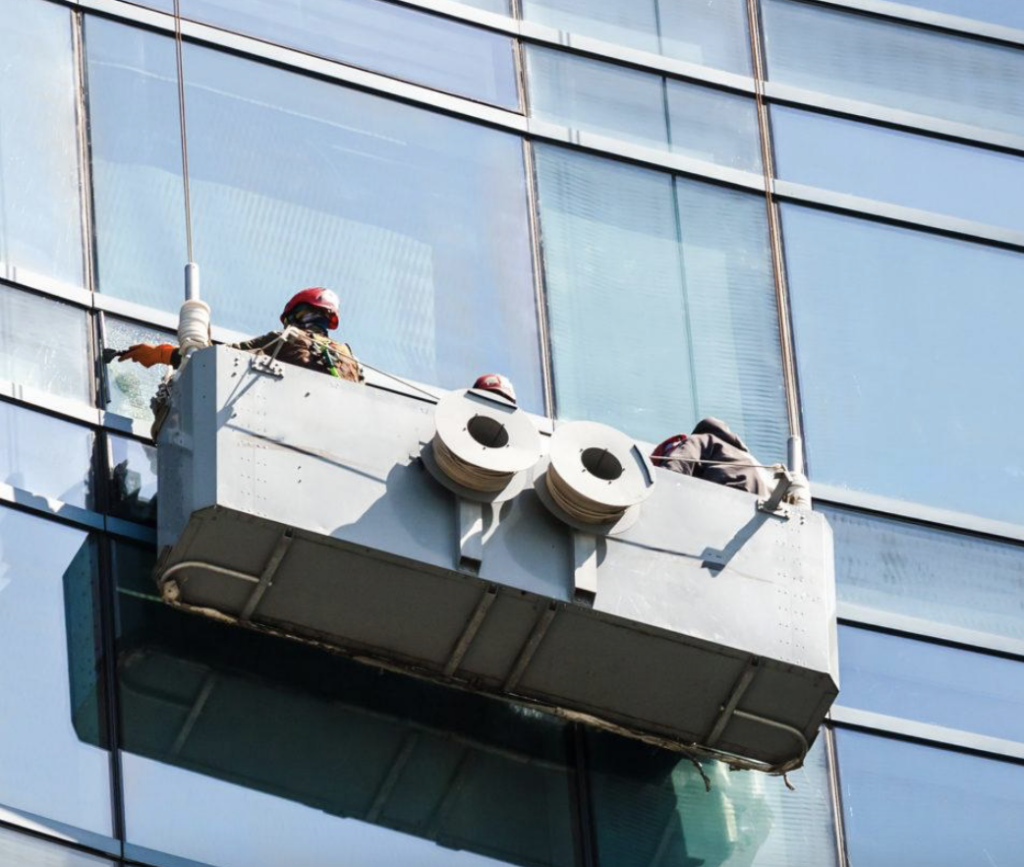
The Specialist Access Engineering and Maintenance Association (SAEMA), the national trade association representing the permanent and temporary suspended access industry, is warning employers and building managers not to make assumptions about competence when people are working at height.
New Health and Safety Executive figures confirm what the industry has long known: falls from height remain the UK’s leading cause of workplace fatalities, accounting for around one in four worker deaths.
SAEMA’s message is clear. Competence should never be assumed. It must be built through specialist training and demonstrated through current, verifiable credentials. Suspended access systems are not simply pieces of equipment attached to a building. They are engineered safety systems, often operating hundreds of feet above the ground, on which people’s lives depend. Operating them safely requires more than general experience of working at height. Users must understand the equipment, how it interfaces with the building, the specific hazards present on site and what to do if something goes wrong.
Part 1 is the start, not the finish
Under BS 6037, suspended access training takes place in two stages.
Part 1 provides the underpinning theory, covering the equipment, working at height and general hazards through separate online courses for permanent and temporary systems. Successful candidates receive a virtual training card that can be verified in real time.
More than 5,000 people have completed Permanent Part 1 since it launched in 2021.
However, completing Part 1 alone does not make someone competent. Competence requires practical training that proves an individual can apply that knowledge safely.
Turning theory into competence
For temporary suspended access equipment, Part 2 provides this essential practical training. It covers:
- Equipment set-up and safe use
- Site-specific hazards and risk assessments
- Safe operating procedures
- Emergency and rescue arrangements
Candidates must complete Temporary Part 1 before progressing to Part 2. The two stages are designed to work together, building theoretical understanding before putting it into practice.
Skipping the practical stage leaves a significant gap in an operative’s knowledge and ability.
“Nobody should be expected to operate suspended access equipment based on theoretical knowledge alone,” explains Tony Seddon, Managing Director of SAEMA. “Both stages of the training matter. When people are working at height, there is simply no room for assumptions about their competence.”
“Duty holders carry responsibility too” continues Tony. “Responsibility does not stop with the operative. The safety of suspended access equipment depends on decisions made throughout its lifecycle, from design and installation to inspection, maintenance and daily use. Building owners and facilities managers may never operate the equipment themselves, but their decisions directly influence how safely others can work. SAEMA’s Duty Holder course has been developed specifically for those with this responsibility. It helps duty holders understand their legal obligations, ask contractors the right questions, identify potential problems early and make informed decisions about maintenance, inspection and training.”
Before work starts, ask:
- Has the user completed the correct Part 1 course and can their training card be verified?
- Have users of temporary suspended access equipment also completed Part 2?
- Do they understand the site’s emergency and rescue procedures?
- Has the equipment been inspected and maintained by competent specialists?
- Does the person responsible for the building fully understand their duties?
If the answer to any of these questions is no, work should not begin. Training is fundamental to protecting everyone who relies on suspended access equipment to carry out their work safely.
For more information visit training.saema.org